One of Colin Ward’s greatest contributions was his focus on childhood and the built environment. This interest first appears in a chapter of Anarchy in Action (1973) – ‘Schools No Longer’ – where Ward discusses the genealogy of education and schooling, in particular examining the writings of Everett Reimer and Ivan Illich, and the beliefs of anarchist educator Paul Goodman. Many of Colin’s writings in the 1970s, in particular Streetwork: The Exploding School (1973, with Anthony Fyson), focused on learning practices and spaces outside of the school building. In introducing Streetwork, Ward writes, “[this] is a book about ideas: ideas of the environment as the educational resource, ideas of the enquiring school, the school without walls…” (1973: vii). In the same year, Ward contributed to Education Without Schools (edited by Peter Buckman) discussing ‘the role of the state’. He argued that “one significant role of the state in the national education systems of the world is to perpetuate social and economic injustice” (1973: 42). Here, we can again see the inter-relatedness between Ward’s own experiences, politics and writings. Ken Worpole, fellow writer and collaborator, reflects on this period of Colin’s work, which also included the initiation of a Bulletin of Environmental Education through the Town and Country Planning Association:
The point…was to help get children out of school and into their communities, to talk to local people, and explore their neighbourhood, its amenities and utilities, and understand how buildings, streets, landscapes and social life interact. This led to Colin’s focus on the unique world of childhood which, in the end, may prove to have been his – and anarchism’s – most enduring contribution to social policy. (Worpole, 2010)
Indeed, in The Child in the City (1978), and later The Child in the Country (1988), Ward examined the everyday spaces of young people’s lives and how they can negotiate and re-articulate the various environments they inhabit. In his earlier text, the more famous of the two, Colin Ward explores the creativity and uniqueness of children and how they cultivate ‘the art of making the city work’. He argued that through play, appropriation and imagination, children can counter adult-based intentions and interpretations of the built environment. His later text, The Child in the Country, inspired a number of social scientists, notably geographer Chris Philo (1992), to call for more attention to be paid to young people as a ‘hidden’ and marginalised group in society. Ward, however, was keen to stress the individuality of children and their educational needs, quoting cultural anthropologist Margaret Mead that “it’s a good thing to think about the child as long as you remember that the child doesn’t exist, only children exist, every time we lump them together, we lose something.” (1978: vi) Ward was also an educator himself as a teacher of Liberal Studies at Wandsworth Technical College in South London during the 1960s. This grassroots experience of education, including his work as an Education Officer, gave Ward’s writing an authoritative and yet sympathetic edge. This quality, combined with his passionate and long-held concern with the politics of place, makes Colin Ward an inspirational key thinker.
Mills, S. (2010) ‘Colin Ward: The ‘Gentle’ Anarchist and Informal Education’ the encyclopaedia of informal education.[www.infed.org/thinkers/colin_ward.htm].
]]>This example of student driven action goes well beyond adult organized marches, or adult driven activity for social justice. Many of these young people show an enduring understanding of their interdependence and interconnection with a nation and the world. For example, at minute 11:00 in the video a young woman articulates a distinct article of the UN Declaration on the Rights of Indigenous Peoples (More on the declaration and UNPFII here!)
For all of us who see open and free learning as a fundamental human right, it’s important to recognize that there is global deliberation and decision making on issues well beyond neoliberalism happening in the UN and in other spaces….How we participate in these movements and with others around the world on these issues will shape the common bond we have as humans in the 21st century. As ecological and economic overshoot continues, understanding how to participate and network for education and global civic culture will increase in importance.
Note:
]]>Since [UN Declaration on the Rights of Indigenous Peoples] adoption, Australia, New Zealand, Canada and the United States have all reversed their positions and now endorse the Declaration.
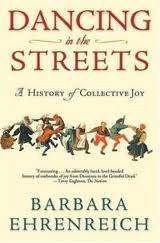 I was inspired today reading through The Blended Lifestyle a blog linked to the Dark Mountain Project site. One of the things that drew me to Dark Mountain was the hope that Dougald Hine (a project founder) exudes in his writing (site, blogs, Twitter). I have been digging into Dark Mountain and enjoying what I find. My research into the site took a pleasant and unexpected turn as I linked out, and perused the favorite movies and books at The Blended Lifestyle. After my last post of yesterday (writing that temporarily pulled me into a short malaise) I am overjoyed to get present and breath deep of my life today. I also look forward to reading Ehrenreich (2006) Dancing in the Streets: A History of Collective Joy….
Powered by ScribeFire.
]]>
A day in the learning ecology of Piper Hahn
Piper is a 15 year old who lives in Midcoast Maine, US. A year ago, Piper heard about a new way to learn, and decided to take part in a new learning experience called the Maine Networked Learning Project. Known as “the Mesh” to participants, this learning ecology offered Piper the chance to apply her passion for learning in highly experiential and collaborative ways with groups of young people of varied ages, adult and youth mentors with knowledge territory specialties and organizations focused on ensuring sustainable and resilient societies, economies, and the environment. This is a snapshot of her day.
A day in the learning ecology of Piper Hahn
Piper gets ready for her week by sitting outside sipping tea and looking at her smart phone. She is checking project updates sent from the team she has been working with for the last two months on her Google Reader and Twitter feed. The project Piper is checking in on deals with food justice in the rural communities of her bioregion.
Seeing many updates, and much activity she decides to look at the overall “mesh” schedule for the day. She notices that the MNLP van will be moving across the local region starting in an hour. To get a ride on this local transportation system she has to ride her bike to a station stop or have her parents drop her off at the regional mesh meet-up location. But before deciding this she reviews her weekly schedule on her mobile.
Piper notices that she and three others will be presenting at the local Veterans of Foreign Wars organization to a large group on the history of local food cultivation in the region. She and her Food Justice project group have spent a good deal of time completing ethnographic studies of the areas “locals”. These participant interviews are seminal to their presentation as they show that local sustainability and resilience projects are not “outside” or “rich Peoples” pursuits, but can save local economies and the historical heritage this stakeholder group cherishes. The group has also been working in restoration crews on local farms as a service learning tie in to their studies. The project has been extensive. Piper and her group have covered mathematics, experimental sciences, writing, social sciences and much more in an integrated project framework. They have relied on their mesh mentors, local experts, and the internet for research, recording (writing, video) and exhibiting their knowledge and understanding to multiple community stakeholder groups.
As the project presentation pre-work is done, Piper contacts her group via twitter hashtag to remind all that they will need an hour to meet-up before the presentation and to ride their bikes to the VAW hall from the meet-up. Immediately she gets a response from three of the four other group members that they will meet prior to the VAW event. They remind each other that a collaborative learning session will be going on for applied algebra and trigonometry concepts at Noon. This session will be special, as an innovative regional planner from rural Scotland will be mentoring at the Self Organizing Learning Environment today along with their local quantitative reasoning/systems thinking mentors. She video chats with one participant letting her know that she will be at the SOLE, and is hoping to get a ride to her house after today’s VAW presentation. That done, Piper checks with her parents and decides to ride her bike to a mesh station stop. She then rides the mesh van into town and catches up on posts and replies in her Reader on the way.
At the Meet-up location (a wide open space that reminds Piper of a open market of some kind), she settles in with the other young people in study, discussion and deliberation. Today she takes out her tablet and reads a work in global literature that was suggested by a mentor she has in South Asia. She will take notes on the work over the next hour and send those notes via blog post to the mentor. The mentor, other participants and Piper are involved in a global project combining cultural understandings of place into a wiki resource for future learners to use. She sees connections everywhere in her learning and after being inspired by an experience in India she’s just read about, Piper adds content for today’s VFW presentation to the shared presentation document for group review.
Piper takes a run with others from the meet-up, and then decides to review the quantitative reasoning skills that figure into the edible re-vegetation project from Scotland being discussed at the SOLE today. Piper will get another chance to apply her growing knowledge and understanding with today’s SOLE because the re-vegetation work they are doing locally is based on the Scottish project being discussed.
After the SOLE, and successful VAW presentation the group meets at a Mesh group members house. The group has grown from five to seven now as the crew who filmed the presentation and ethnographies over the last monthes are with them to discuss editing and working on the script for the groups public exhibition of findings. Piper and her group know that the scientists, mentors, politicians, local, global participants, and their peers will attend the exhibition. This step in their project leads to funding and further action on their multi-year food security project. After Dinner with the host family, rides home for most, and ePortfolio updates the rest of the week will be full of networked, experiential, and mobile learning directly applied to creating solutions in an interdependent world.
]]>