Stephen Downes:
- Slideshare: Groups vs Networks: The Class Struggle Continues
- Stephen Downes identifies significant differences between networks and groups, along four major axes. Drawn but not discussed at the Future of Learning in a Networked World event in Aukland, New Zealand. This short video explains the drawing at http://www.flickr.com/photos/stephen_downes/252157734
Florian Schneider:
Roberto Greco:
More to come….
]]> Leigh Blackall presents a new view of learning that is critical, open, networked and participatory through his research. In a recent twitter stream and blog post he is asks for collective and open deliberation for a definition of networked learning. As a participant involved in networked learning research and praxis I will offer the following as an entry into the collective imaging and deliberation.
Definitions
Open: Learning is free from institutions or understood to be actively participating in non-institutional learning.
Critical: learning does no harm or actively works for social, economic, and environmental sustainability and resilience.
Participatory: learning is integrative and inclusive of participants regardless of skill level or pre-determined social hierarchy.
Networked: learning happens in a blended mesh. Learners, pedagogues, and others are nodes that exchange information to different degrees, depths and forms both online and in the field.
The best defense of these definitions I have found is presented here by Steven Downes:
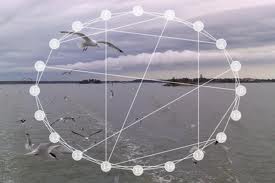
Image above: Watts and Strogatz model/small world network graph, credit: Arpad Horvath
]]>

A video and education reform’s 100 year failure
A timely video inspired by Michael Wesch came across my desk today and it comes at an interesting time in my thinking on education. The Future of Ed Reform? weaves a very short yet potent story about the realities so many of us face who seek to radically change the structure of education from “places of schooling” to “places of learning”.
I have written about critical education in many posts and realize that most of my ideation, design and praxis towards democratic education has met with the realities of institutions, schooling an societal structures around education and official knowledge. I would like to say I met these challenges and take the path I do now, knowing I stand on the shoulders of progressives and a hundred years of work from John Dewey, L. Thomas Hopkins et al., and their contemporaries James Beane, Micheal Apple, Deb Meir and so many others who are in the field not writing prolifically but fostering experiences and learning.
The Future of Ed Reform begs questions of reform and stasis in education. “If so many years of reform, (including some almost 100 years old that espouse the same reform we are seeking in education today) have failed why do we think it will work….this time.” A good question and one I had with a visionary leader and progressive educator in the field just yesterday: More on this in future posts.
The author of Future of Ed Reform is right to question these new “reforms” and their ability to succeed. The authors points at “the revolution failed” are right. The use of Dewey as an example is illustrative of the issues here. Dewey, Francis Parker, L. Thomas Hopkins et al. faced a backlash from an American society bent on order and standardization. Though their reform was brilliant and on the mark in many ways, school in the 20th century was an institution based on order and control just as it is today. Today as in the 20th century, linear schedules, corporate curricula, and the extra-curricularization of energy and interests still combine to hold firm what has been at the expense of what is. The School structure and its meanings are the issues of today just as they where a century ago.
Dewey did call for a revolution from schooling to learning, and espoused among so many brilliant ideas a call for deschooling on the grounds that control and order do little for learning. Dewey (1938) reflects,
Almost everyone has had occasion to look back upon his [and her] school days and wonder what has become of the knowledge he was supposed to have amassed during his [and her] years of schooling….but it was so segregated when it was acquired and hence is so disconnected from the rest of experience that it is not available under the actual conditions of life. (p.48)
We must reflect presently on the “reform” engines of today motoring throughschools and quietly accepting the structures imposed in what amounts to seeing learners and their communities as commodities and economies of scale, versus dynamic realities of human possibility. The author of The Future of Ed Reform? is calling out the realities of societal structures and the school not the reform which may have similarity to our 100 year past.
To Create, To Design
It is no mystery to many that I favor the design of new learning Ecologies that leverage much of what Dewey et.al espoused and practiced in the fields of experiential and democratic education. I have also focused my work on the networking of blended learning ecologies. A combination of Illich’s learning webs, the mesh ideas of OLPC and my roots in experiential and mobile learning in the big outside. This design like so many is at risk when placed against the onslaught of stasis in education. No Softballs here, we have heard them in detail. Yet I find myself asking are we ready for a networked learning ecology? Is society? What will it take?
So anthropologists, critical educators, deschoolers, unschoolers, reformers, what will make your vision work? Are you part of a revolution? If so why, and will that revolution be enough force to break the dam of traditional control and order schooling to create or recreate places of learning for society? I am interested in hearing your voice and working with you.
]]>
A day in the learning ecology of Piper Hahn
Piper is a 15 year old who lives in Midcoast Maine, US. A year ago, Piper heard about a new way to learn, and decided to take part in a new learning experience called the Maine Networked Learning Project. Known as “the Mesh” to participants, this learning ecology offered Piper the chance to apply her passion for learning in highly experiential and collaborative ways with groups of young people of varied ages, adult and youth mentors with knowledge territory specialties and organizations focused on ensuring sustainable and resilient societies, economies, and the environment. This is a snapshot of her day.
A day in the learning ecology of Piper Hahn
Piper gets ready for her week by sitting outside sipping tea and looking at her smart phone. She is checking project updates sent from the team she has been working with for the last two months on her Google Reader and Twitter feed. The project Piper is checking in on deals with food justice in the rural communities of her bioregion.
Seeing many updates, and much activity she decides to look at the overall “mesh” schedule for the day. She notices that the MNLP van will be moving across the local region starting in an hour. To get a ride on this local transportation system she has to ride her bike to a station stop or have her parents drop her off at the regional mesh meet-up location. But before deciding this she reviews her weekly schedule on her mobile.
Piper notices that she and three others will be presenting at the local Veterans of Foreign Wars organization to a large group on the history of local food cultivation in the region. She and her Food Justice project group have spent a good deal of time completing ethnographic studies of the areas “locals”. These participant interviews are seminal to their presentation as they show that local sustainability and resilience projects are not “outside” or “rich Peoples” pursuits, but can save local economies and the historical heritage this stakeholder group cherishes. The group has also been working in restoration crews on local farms as a service learning tie in to their studies. The project has been extensive. Piper and her group have covered mathematics, experimental sciences, writing, social sciences and much more in an integrated project framework. They have relied on their mesh mentors, local experts, and the internet for research, recording (writing, video) and exhibiting their knowledge and understanding to multiple community stakeholder groups.
As the project presentation pre-work is done, Piper contacts her group via twitter hashtag to remind all that they will need an hour to meet-up before the presentation and to ride their bikes to the VAW hall from the meet-up. Immediately she gets a response from three of the four other group members that they will meet prior to the VAW event. They remind each other that a collaborative learning session will be going on for applied algebra and trigonometry concepts at Noon. This session will be special, as an innovative regional planner from rural Scotland will be mentoring at the Self Organizing Learning Environment today along with their local quantitative reasoning/systems thinking mentors. She video chats with one participant letting her know that she will be at the SOLE, and is hoping to get a ride to her house after today’s VAW presentation. That done, Piper checks with her parents and decides to ride her bike to a mesh station stop. She then rides the mesh van into town and catches up on posts and replies in her Reader on the way.
At the Meet-up location (a wide open space that reminds Piper of a open market of some kind), she settles in with the other young people in study, discussion and deliberation. Today she takes out her tablet and reads a work in global literature that was suggested by a mentor she has in South Asia. She will take notes on the work over the next hour and send those notes via blog post to the mentor. The mentor, other participants and Piper are involved in a global project combining cultural understandings of place into a wiki resource for future learners to use. She sees connections everywhere in her learning and after being inspired by an experience in India she’s just read about, Piper adds content for today’s VFW presentation to the shared presentation document for group review.
Piper takes a run with others from the meet-up, and then decides to review the quantitative reasoning skills that figure into the edible re-vegetation project from Scotland being discussed at the SOLE today. Piper will get another chance to apply her growing knowledge and understanding with today’s SOLE because the re-vegetation work they are doing locally is based on the Scottish project being discussed.
After the SOLE, and successful VAW presentation the group meets at a Mesh group members house. The group has grown from five to seven now as the crew who filmed the presentation and ethnographies over the last monthes are with them to discuss editing and working on the script for the groups public exhibition of findings. Piper and her group know that the scientists, mentors, politicians, local, global participants, and their peers will attend the exhibition. This step in their project leads to funding and further action on their multi-year food security project. After Dinner with the host family, rides home for most, and ePortfolio updates the rest of the week will be full of networked, experiential, and mobile learning directly applied to creating solutions in an interdependent world.
]]>
After reading an illuminating post today from Joss Winn that articulated his et al ideas for an institutional shift, I was struck by how similar the vision is in many ways to my work with the Institute for Global Civic Culture. Winn, explains in the paper entitled Pedagogy, Technology and Student as Producer that work towards critical networked learning environments can be powerful catalysts for change,
“Student as Producer is not simply a project to transform and improve the ‘student experience’ but aspires to a paradigm shift in how knowledge is produced, where the traditional student and teacher roles are ‘interrupted’ through close collaboration and a recognition that both teachers and students have much to learn from each other.”
I look forward to following Winn’s work and perhaps collaborating in the future on projects for teenagers. The learning environments Winn describes could be vital steps to address the failure of educational systems and institutions today.
Also very interested in finding more out with regards to Winn’s et al work on resilient education.
]]>“Imagining how events could be otherwise than they are is a hallmark freedom and power of human beings” D. Bob Gowin (1988)
“a little girl came to the teacher after class and said to the teacher, “What did I learn today?” And the teacher said, “That’s a funny question. Why do you ask me that?” The little girl said, “When I get home, Daddy will ask me, ‘What did you learn today?’ and I never know what to say.” Seymore Papert: The Future of the School

First Words
The hierarchical, managerial, and corporate controlled curricular structures of the “school” are not adequate to meet the challenges faced by the worlds young people in the twenty-first century. Further, the one hundred year absence of systemic change in education provides an environment that is ripe for deep change. In 2010 global education systems still lack meaningful consensus on educational change. Though mainstream acknowledgment is beginning to solidify around the need for computers in learning to address the “21st century skills” (Hayes Jacobs ed. (2010); Bonk (2009) Davidson and Goldberg, (2009) the system of “schooling” is still static. The bulk of school and curricular policy remains dangerously static (Apple, 2010, Darling Hammond, 2010) and rooted in what Apple, Au, and Gandin (2009, p.3) have called “the ideological and institutional processes and forms that reproduce oppressive conditions”. The realization that educational systems are harmfully unresponsive to needed change raises in importance when considering that our world systems are in decline and globalization operates without regard for much of the worlds cultures (Apple, ed. 2010).
Our interdependent world calls for a deliberative, culturally conscious, and collaborative generation. With this in mind the future role of education as a change agent has never been more important. In the following posts I will propose a new learning ecology that redefines rather than refines educational research, design and praxis. My thoughts are grounded in the seminal work of critical educators (James Beane, 1995,1997; Michael Apple, 1990,1996, 2009, 2010, Boulding,1988), Network Learning and Connectivist thinkers, designers, and practitioners (Roberto Greco George Siemens, Steven Downes, Alec Curousa, Martin Weller, Graham Atwell, Leigh Blackwell et al), Learning Scientists ( Mitra, Sawyer, Krajcik and Blumenfeld, Fishman Davis, (2006), and visionary leaders in many different fields, spaces and times (Illich (1971); Mitra; Jacobs; Hine; Brazee; Maxmin; Alfred (2009).
The time for a deep change in education has come. As the world realizes ecological overshoot (Catton Jr., 1980; McKibben 2006, 2010), systemic global social crisis (UN millennium Development Goals, 2010; ICISS, 2001), and the exponential growth in global connectivity, education can and must help catalyze a new global civic culture through the radical restructuring of how we provide learning to our world.
A reflection.
As we consider the slight arc of change in global education over the last one hundred years the fact that the world is facing an uncertain future is not surprising. Similarly when we utilize our social imagination, it is not surprising that we ideate about myriad new configurations, wishes and hopes for education: “if only we could…., wouldn’t it be wonderful if….,we need to change….”. The change we seek might ensure that those facing uncertain futures might do so with the tools necessary for the systemic change needed. I will advance that what we need is a deep and systemic change in education to promote learning that bypasses the traditional structures of the status quo; which today define the purpose and products of the educational system in the twenty-first century. This post will spend little time addressing the status quo, for as in the climate change debate where there is no quantifiable argument against the fact that the world is warming because of C02 emissions from fossil fuel consumption, there to is no quantifiable debate in education about what the deplorable conditions in education today. Yes, there are myriad proponents of structures in education who defend the bricks and mortar school. These educationaires grind on in there protectionism of command and control managerial structures in education with impunity. These strong educational polities have exhausted the last 40 years with nothing more than millions of dollars spent and subaltern communities further rooted in there societal malaise. Minimally changing the status quo in education through reform large or small is a noble but ultimately futile endeavor as the factors that reinforce oppressive educational conditions have colonized education to the point of full enculturation. Revisioning research, design, and practice in education is therefore a vital step to realizing real change. The potentials for addressing real change in global learning through a nexus of Critical Education, network learning, experiential learning, and emerging learning sciences are real. As Elise Boulding (1996)remarked, “the materia prima is at hand. We can join the company of persons-in-becoming who are working to give it shape, or we can stand on the sidelines wailing. The choice is ours”. For this century our choice is vital. We must seize our moment and give it shape.

An ongoing vision I have, what I want to be a part of….
Sanguine voices are heard on a coastal beach in Maine as a group of high-school age young people gather around multiple mobile devices that are networked to their peers in China, New Zealand, London, Uganda and Bolivia in a project called “The Interdependence of Global Water”. This international project based learning pod are gathering, some waking at 1:00am to view sea run Salmon return to spawn on the Penobscot River in Maine, United States. These young people are doing more than watching; they helped make the Penobscot River viable for this process again through their combined research, writing, and service efforts. In partnership with indigenous communities, business interests, academics, local, regional and national governments, and conservation biology organizations they have joined a coalition to remove dams and restore native salmon spawning corridors. There study was intense, memorable and had lasting impact on all involved. As these young people wove service and action into their “core” themes of study: society, environment and economics, there lives were changed, and they helped catalyze a movement for new learning around the world. What we find out is
that these young people are collaborating together on similar projects in all of the six world regions mentioned and in concert with each other in a new learning ecology. There are no “walls” in this learning ecology, rather these students learn year round, individually and in groups at regional based learning centers where they come to collaborate, problem solve and socialize with other project based learners. The bulk of the work these brave young people accomplish is done in the field, at home, or traveling in “mobile learning labs” utilizing the most innovative eLearning tools imaginable. The blended eLearning networks used to collaborate on the integrated global projects mentioned, where also leveraged to connect domain territory specialists and mentors to young people as they constructed an understanding of quantitative reasoning, social sciences, literature, experimental sciences, and visual arts in integrated project based learning. The ePortfolios of each learner on that beach in Maine and around the world would be constructed to exhibit learner mastery of knowledge territories and to meet international and national standards in education. This is international learning done across cultural, environmental and economic borders; creating a global frontier for critical education.
I know I have missed a few below (will update)….
Alfred, G. R. (2009). Wasase: indigenous pathways of action and freedom. Toronto, Ont.: University of Toronto Press.
Apple, M. W., Au, W., & Gandin, L. A. (2009). The Routledge international handbook of critical education. New York: Routledge.
Apple, M. W. (1995). Education and power. New York: Routledge.
Apple, M. W. (2000). Official knowledge: democratic education in a conservative age. New York: Routledge.
Apple, M. W., & Beane, J. A. (2007). Democratic schools: lessons in powerful education. Portsmouth, NH: Heinemann.
Beane, J. A. (1997). Curriculum integration: designing the core of democratic education. New York: Teachers College Press.
Boulding, E. (1988). Building a global civic culture: education for an interdependent world. New York: Teachers College Press, Teachers College, Columbia University.
Bowles, S., & Gintis, H. (1976). Schooling in capitalist America: educational reform and the contradictions of economic life. New York: Basic Books.
Catton, W. R. (1980). Overshoot, the ecological basis of revolutionary change. Urbana: University of Illinois Press.
Darling-Hammond, L. (2010). The flat world and education: how America’s commitment to equity will determine our future. New York: Teachers College Press.
Jacobs, H. H. (2010). Curriculum 21: essential education for a changing world. Alexandria, VA: Association for Supervision and Curriculum Development.
Illich, I. (1971). Deschooling society. New York: Harper & Row.
McKibben, B. (2010). Eaarth: making a life on a tough new planet. New York: Times Books.
Sawyer, R. K. (2006). The Cambridge handbook of the learning sciences. Cambridge: Cambridge University Press.
]]> For some time I have been deeply interested in the work of Michael Apple. Apple’s writing on the politics of curriculum (specifically 1990, 1995, 2000), his work with James Beane on democratic schools (see 1995, 1999, 2007), and more recently his edited works in the field of critical education (2009, 2010) have helped me form some of my core values around learning, society and humanity.
Over the last month, I have also taken an interest in the work of Leigh Blackall(Leigh’s Blog). Leighs interests in deschooling, free schools and social change caused me to contact him. After looking over some blogged reading notes of Leighs, and having a short Twitter conversation with him I will be posting a few reading notes of my own starting with Michael Apple’s newest work here. I hope they are helpful to those considering these topics.
Apple, M. (2010). Global crisis, social justice, and education. New York: Routledge.
Synthsis
This is a very important work for those seeking change in learning. Global crisis, social justice, and education is an affirmation of so much thinking and reading I have done on the need for a mutation in education. My doctoral research looks at a nexus of critical education and the possibilities of networked learning ecologies to fundamentally shift the non-democratic systems of education. This book has been a good resource in many ways. The silent power of neo-liberalism is easy to set aside in the world of internet freedoms. Apple helps us remember that as reseachers, designers, and practitioners in the field we have a role to play in international human rights, the common good, and as critical scholar/activists in our learning communities.
Apple uses Rosa (2008, p.4) in Global crisis, social justice, and education to introduce the seminal arguments of critical education (p.19):
Radical Democracy is not just born out of our option to participate in the ordinary political infrastructure. It is a process involving the ongoing democratization of civil society, the constant interrogation of how exclusion on the grounds of multiple markers occurs even when progressive projects are unfolding, and problematizing of conditions that fail to clal into question the various ways in which economic systems undermine political cultures, The term encodes democracy as unfinished. Educators need more exposure to such language given the reality of schools as highly undemocratic spheres where various oppressive ideologies converge in front of a captive audience. A democratic political system cannot com to fruition if the institutions of that society are undemocratic, anti-democratic, or fail to (re) create the structures and conditions that lead to further democratization. Democracy flourishes when democratic cultures are the norm.
Overview
In Global crisis, social justice, and education, Apple outlines an argument and challenge for critical educators and weaves the need for critical education (a nexus of scholarly endeavor: ideation, research, development, and activism), post-colonial mentalities and systems thinking to address the multifaceted pressures facing global education, in a globalized world.
Thesis
Apple et al. use four regional case studies, the US, Japan, the Israel|Palestinian state , and Latin America to prove that critical educators (teachers, researchers, learners) and social movements are needed to countervail the neo-liberal, and neo-conservative designs (against social justice and progressive education) surfacing as reform movements around the world as entrenched facets of globalization.
Evidence
Apple frames global crisis using a neo-marxist (world sytems theory) and radical democractic framework to explain how an integrated international economy effects core and periphery states. Global crisis emerges when the states both core and periphery adopt neo-liberal (market based reforms that further marginalize subaltern groups ,and place increasing power with corporations and business) and neo-conservative ( hegemonic control through militarism and economic policy). Apple argues that these forces denude social justice through “reform’s”. These reforms focus on socio-economic policy, and education. Apple argues that neo-liberal and neo-conservative “reform” actively sideline democratic and progressive education initiatives that foster awareness and action for the subaltern and state in favor of curriculum standardization (US, Israel, Japan), unfair distribution of educational resources to subaltern groups (Palestinian State, United States, Mexico) and in many cases human rights violations Palistinian State, Isreal). Apple et. al use this framework to highlight effective progressive movements working to counter neo-liberal and neo-conservative reform and to call on those in the field of education to proliferate the frameworks of critical education in research and practice.
Apple et al. illuminate the social movements, critical educators (p.40-45 Byrd Academy)(1), (p.55, role of “schools”) and the power of new networked learning;(p.94-100),(p.136-153 see note 17 Caspi(1979) and The Kedma School,(170-185 CEAAL), that are challenging neo-liberal, and neo-conservative hegemonic proliferation. In doing so we are given both inspiration, and example of movements, projects and people working to address critical education and globalization. These progressive schools are unique according to Apple because they have risen in opposition to neo-liberal and neo-conservative “reforms” in areas where where these policies are prolific and well entrenched (The United States, Japan, Isreal/Palestinian State, and Mexico).
Specifics of Interest: On Our Role as Researchers and Practitioners
Apple states that the new critical educator may engage in research acting as secretaries to social movements centered around education….Apple et al provide reminders, ideas and resources both theoretical and empirical regarding critical education, and the role of the “organic”,or “Public” intellectual. (He uses Gramsci from the Prison Journals well here (p.17).
“I and many others have argued that education must be seen as a political act”
” The restructured role of the researcher–one who sees his or her task as thinking as rigorously and critically as possible about the relations between the policies and practices that are taken for granted in education and the larger sets of dominant economic, political, and cultural relations, and then connects this to action with and by social movements is crucial to what we are doing with this book.”
Apple reminds us that education can and should be viewed as activism.
I have at my core a belief and share with Apple as a critical educator that education can be the determinant of peace and unity in our world. That said I believe that world systems theory and the economic division of the world described by Apple et al. has led to a very dangerous place for humanity. The huge division of wealth and access to resources in the world has led to radicalization and anti-democratic policy’s in education.
How we recognize the role of critical education in our network learning ideation, research, design and practice is of concern to me. Leigh Black
all, Stephen Downes, and George Seimens and recently Florian Schneider have all given me cause for hope.
References
Apple on Critical Education: this is a good Introduction (translation is edited out here) See original here.
Apple, M. W. (1990). Ideology and curriculum. New York: Routledge.
Apple, M. W., & Beane, J. A. (2007). Democratic schools: lessons in powerful education. Portsmouth, NH: Heinemann.
Apple, M. W. (2000). Official knowledge: democratic education in a conservative age. New York: Routledge.
Apple, M. W. (1995). Education and power. New York: Routledge.
Apple, M. W., Au, W., & Gandin, L. A. (2009). The Routledge international handbook of critical education. New York: Routledge.
Apple, M. (2010). Global crisis, social justice, and education. New York: Routledge.
Apple, M. Theory, Research, and the Critical Scholar/Activist. Educational Researcher March 2010 39: 152-155)
Gramsci, A. : Prison Journal’s on Education and “selections 1st ed.”(1971)
Rosa, R. (2008) Savage Neo-Liberalism Education Review, 11, 1-17

Can you have connectivism without computers….could you treat the classroom/learning center and face to face “time” like a connectivist hub? If so, where would the student go to find, validate, leverage, analyze and synthesize information in that place? Could she problem solve and communicate in an unrestricted way to learn freely? ….”
Connectivism is about networks of learning that connect individuals with the world. This may be messy and no, it most likely does not fit neatly into the institution of “schooling”. That said, connectivist praxis can happen wherever we choose to embrace the learning theory and experience. We need to work to find ways to learning that are meaningful and stop squabbling over old institutional theories that fit neatly into our outdated vision of the school.
As Sawyer (2006) states,
Educated graduates need a deep conceptual understanding of complex concepts, and the ability to work with them creatively to generate new ideas, new theories….and new knowledge (p.2).
We need to focus on active connections, networks, and our ability to revision the places education happens.
Sawyer, R. K. (2006). The Cambridge handbook of the learning sciences. Cambridge: Cambridge University Press.
This post was inspired by a student….and new teacher in the field
]]> I have been following George Siemens and Stephen Downes for two years now. After an attempted CCK10, my participation in CCK11 is fulfilling a need in my life and learning. At times I look at the projects I am undertaking and the interests I have and want to chide myself using some institutional diatribe about “having to much on my plate”, “Depth vs Breadth”, “Ph.D. vs action and service in the field (to teach, experience and design)”. What CCK11 is re-enforcing for me is that my paths are natural, can be connected, and that those connections can and will grow, focus, change, and enhance my experiences and those of others. I am grateful and inspired. So how have I done in my estimation so far?
Dave Cormier (2010) lists the following index of success:
Orient: Done to date: Readings: good (most this week had been read), Know where things are and have bookmarked/essentials!
Declare: Blog, posts, tags, twitter…..yes
Network: Following via Twitter #CCK11, Have read and commented on Blogs and Replied to those who have commented….Need to do more at this point. Who? Much may depend on clusters, how will we find clusters!
Cluster: Eagerly awaiting….See Network
Focus: Is the end in mind? Yes, I do know what I want out of this set of experiences, looking forward to seeing where this goes….
As put in my last post Stephen Downes encourages us to: Aggregate, remix, re-purpose and feed forward information….I will be working on this design daily.
]]>
Aggregate, remix, re-purpose and feed forward information
I want to feed forward these amazing talks from Stephen and George. The clarity and focus shown in both are incredible. I would be very interested in others views of these talks and want to encourage you to reply to this post as interested.
Stephen Downes
Specifically I am interested in the theory and practice of free learning that Stephen puts forth and its relationship to the current structures of education in general. Stephens scholarship and rebuttal of instructionism is honest and deeply meaningful. What examples of systemic change in education have you seen on the ground? How do you see connectivist theory and praxis increasing these changes?
George Siemens
CCK11 participants. What are your initial reactions to the following quotes and Tedx Talk by George?
“The purpose of education is to prepare individuals for society, to contribute….” “technology is philosophy, technology is ideology”
“The primary task of education in the future is to collapse its functions, its curriculum, its teaching methods, its very mode of inquiry to the point of connectedness. Why do connections form, what patterns do they leave when they form, what is the ultimate impact of that, how do we foster it, how do we create structures, that permit individuals to not be better corerate citizens, but how do we create that so we have students and learners that leave our class spaces who are better citizens, who are better members of society because to change education is to change society “.
As I think of the confluence inherent in a clustering process in CCK11, I would love to hear different viewpoints on these topics and create more initial connection with participants.
]]>